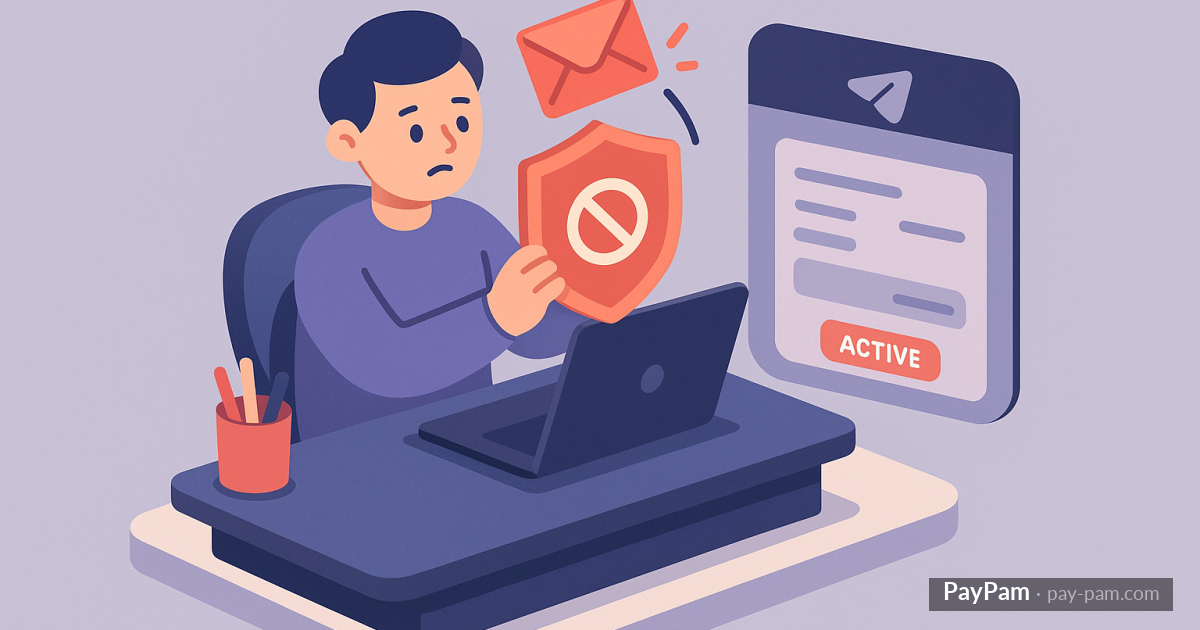
You sell subscriptions through Telegram. Access to the paid group or broadcast list depends on your bot. The moment a paying subscriber blocks the bot, you lose the ability to message them privately — and in practice, they stop receiving what you publish even if they keep paying.
The uncomfortable part: you don’t find out. There’s no notification, no counter. The subscriber pays, you treat them as active, and the message never reaches them.
Why subscribers block the bot (often by accident)
- By mistake, thinking it’s spam because the bot’s name doesn’t ring a bell.
- Out of fatigue, if you send too many alerts or repetitive notifications.
- While cleaning up chats, when reviewing conversations periodically.
- Confusion between your access bot and unrelated promotional bots.
The result is always the same: from that point on, your bot can’t write to them. If you built the experience around the bot (private sends, reminders, renewal notices), the subscriber is disconnected even while paying like clockwork.
What it costs your business
A subscriber who stops receiving your content — even if it’s their own fault for blocking the bot — renews less. The perception is: «this isn’t working anymore». And when they cancel, they don’t even link it to the block — they just stop paying.
Worse, if you don’t detect the blocks, every mass send still tries to reach them. Telegram interprets that as spam, and penalizes you across the board: slower pacing, forced pauses, in extreme cases, a bot ban. A handful of subscribers who blocked your bot can ruin an entire mass send.
What a serious tool should do
- Detect automatically who blocked the bot the first time a message fails for that reason, without having to check logs.
- Exclude those users from subsequent mass sends so they don’t penalize the bot.
- Alert you that X paying subscribers aren’t receiving messages — that’s commercial intelligence, not a technical detail.
- Reinstate the user automatically when they start a conversation with the bot again (sometimes users unblock without telling you).
If you’re running a script or using a tool that just tries and fails silently, you’re blind to all of this.
How to reduce blocks in the first place
- Don’t abuse private sends. Keep bot DMs for what’s important. Use a group post for the rest.
- Identify your brand clearly on the bot: picture, name, description. If the subscriber doesn’t recognize who’s writing, they block.
- Few, useful messages. The email rule applies here too: if it’s not relevant, don’t send it.
- Warn ahead. If you’re changing frequency or type of messages, tell them in the group or by email first.
Tolerance on Telegram is shorter than email. A bot that annoys lasts weeks, not months.
In Telegram Control blocks are detected and logged automatically. Those subscribers are marked and excluded from future mass sends without you doing anything. Integrated with Stripe, you also know if someone has been paying for months without receiving your messages — critical info that’s invisible without this piece.
Keep reading
- How to monetize a Telegram audience without making it a second job
- How to automatically remove Telegram members when they cancel
- How to start selling Telegram subscriptions from scratch